ROLEUX Designer
Spring
Designing a budgeting app around spending decisions instead of spending reports.
Most budgeting tools help users review what already happened. Spring explores how a budgeting app can support someone before they spend.
TIMELINE2026
INTERFACEMobile App
METHODSCompetitive audit · Moderated testing · SUS scoring
T H E P R O B L E M
Budgeting apps are optimized for reporting, not decision-making
While reviewing popular budgeting tools, I noticed a consistent pattern: home screens focused on account balances, spending history, category breakdowns, and financial summaries.
These tools are useful for understanding what has already happened.
They are less useful when someone is deciding whether a purchase fits within their budget in the moment.
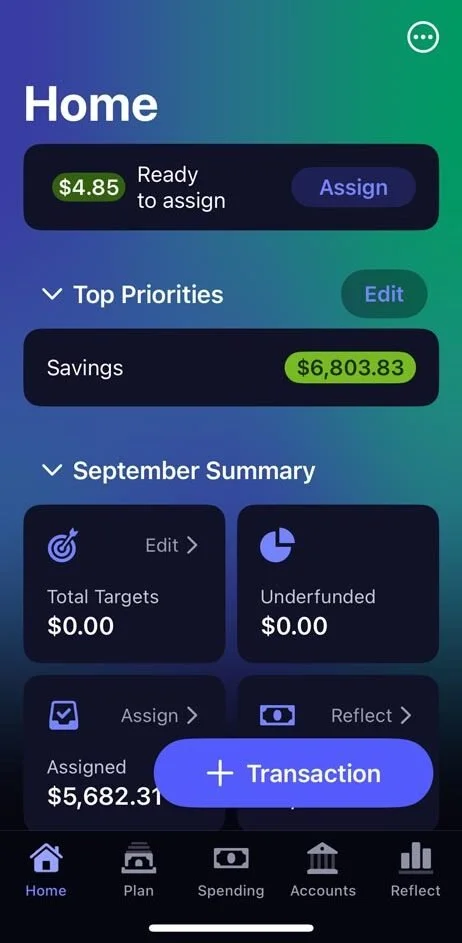
Focuses on historical spending
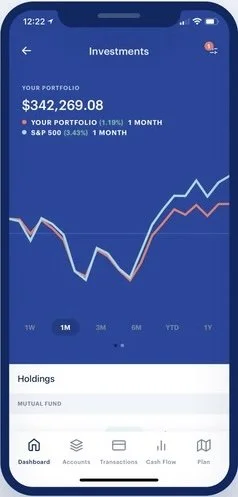
Focuses on net worth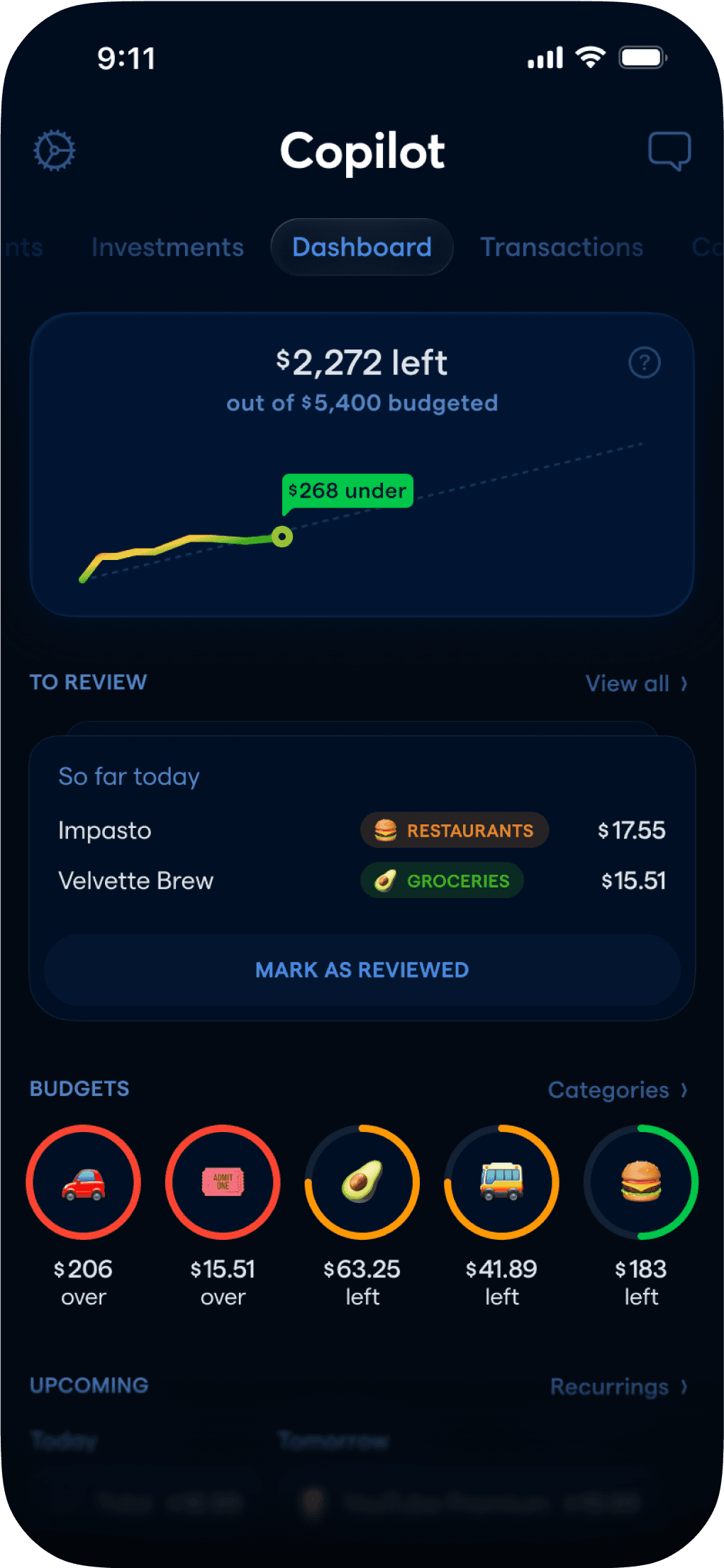
Focuses on historical spending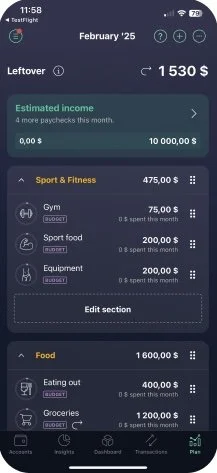
Focuses on historical spendingT H E O P P O R T U N I T Y
Most people budget in their heads
In a survey of 21 participants, 62% said they mentally estimate affordability before making an unplanned purchase rather than checking a budgeting tool or their bank account.
62
%
mentally estimate affordability before making unplanned purchases
21 survey responses
When asked what information would be most helpful in that moment, respondents consistently asked for:
Remaining category budget
How much they had already spent
Whether they were still on track overall
The opportunity wasn't providing more reports.
It was helping users understand where they stood before spending.
T H E D E S I G N R E S P O N S E
Turn budget data into decision support
Rather than building another reporting dashboard, I explored how budgeting information could be surfaced as decision support.
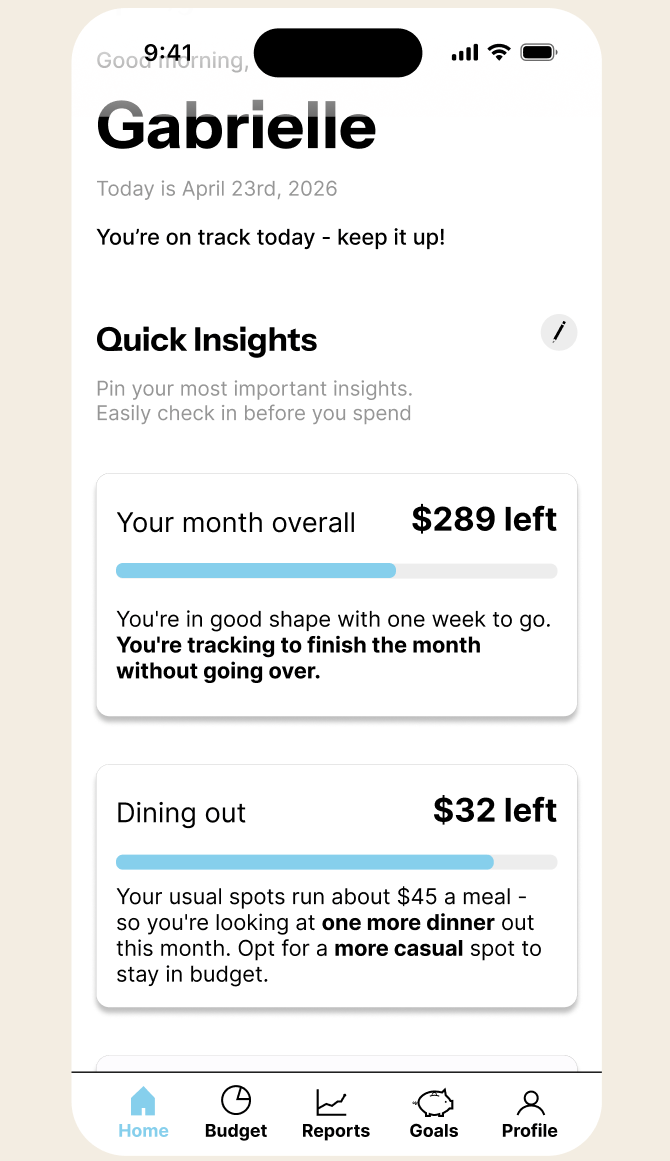
I simplified the experience around customizable home screen widgets focused on the categories users cared about most.
Each widget combines:
Remaining budget
Spending context
Lightweight interpretation
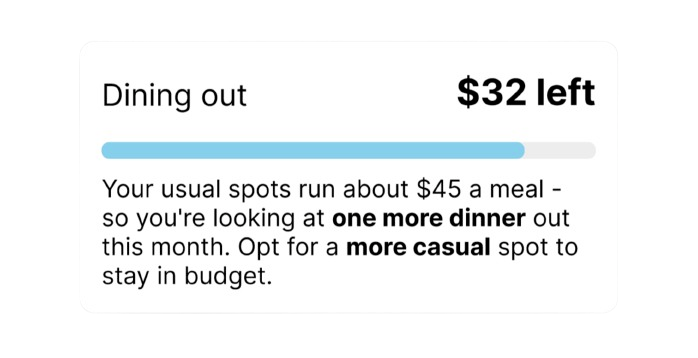
For example:
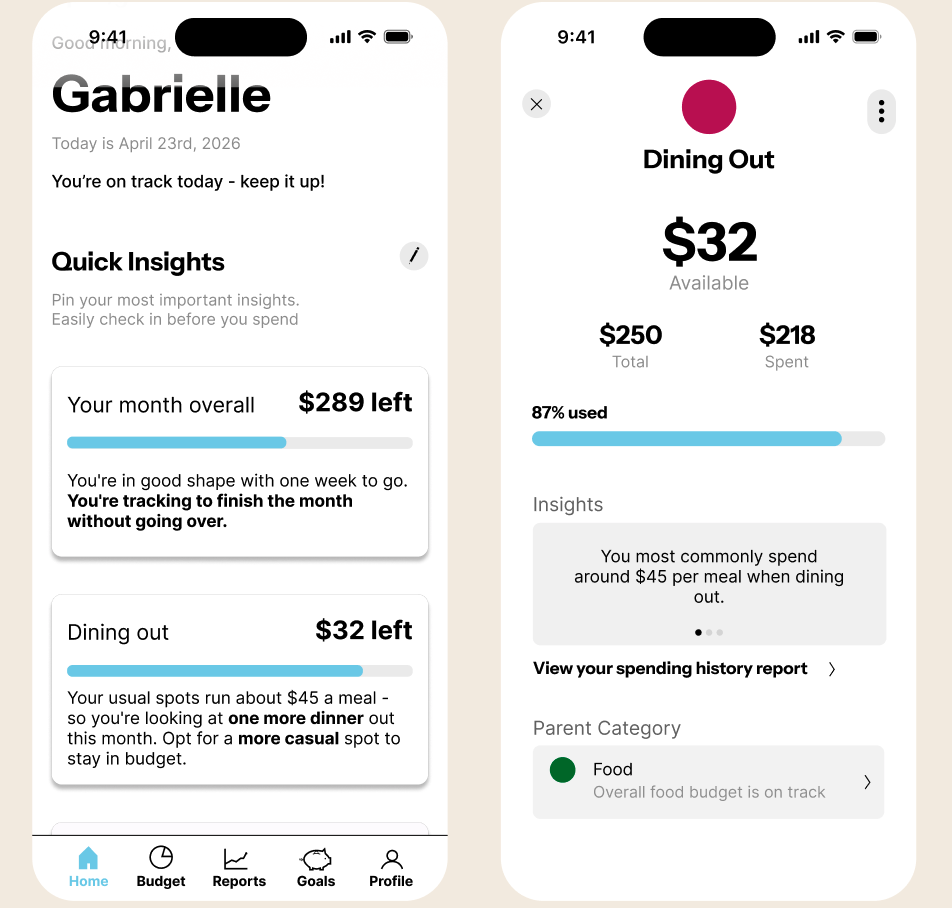
$32 left in Dining Out
became
$32 left. Based on your typical spending, you likely have room for one more meal out this month.
Instead of asking users to interpret multiple charts and categories, the widget surfaces information in a format that can be applied immediately.
T H E C O R E I N T E R A C T I O N
Prioritizing clarity meant showing less information

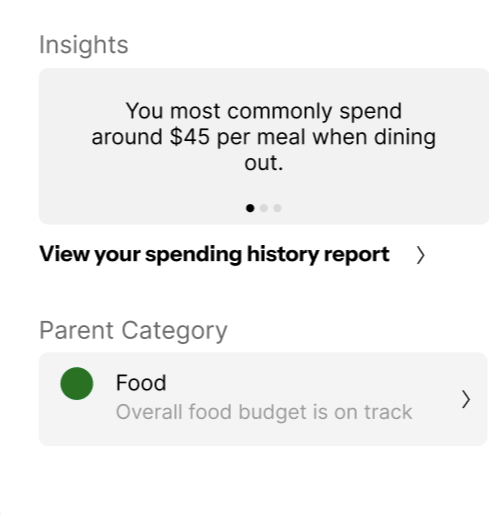
Some users wanted quick answers.
Others wanted detailed financial breakdowns.
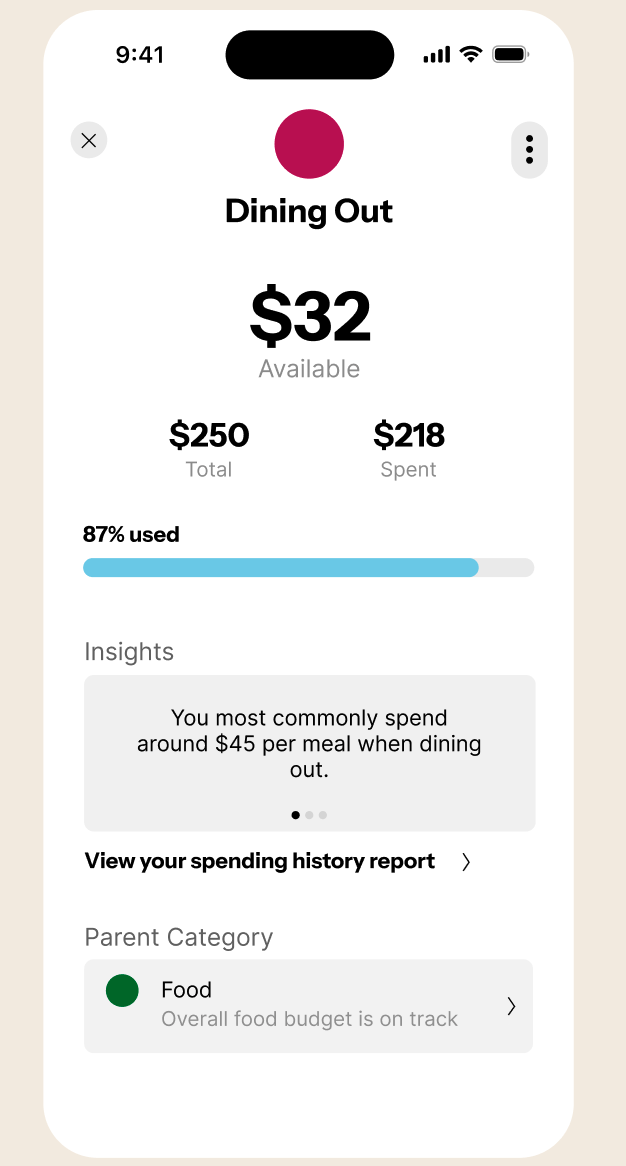
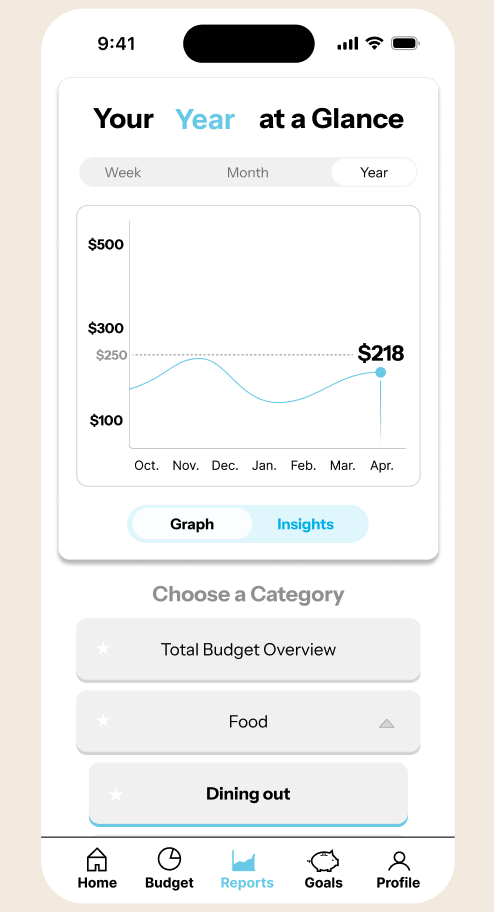
I chose to prioritize quick decision support on the home screen and move deeper analysis into category-level views.
Users gained faster access to high-priority information, but detailed reporting became one interaction further away.
T R A D E O F F N A V I G A T I O N
Improving navigation without hiding useful information
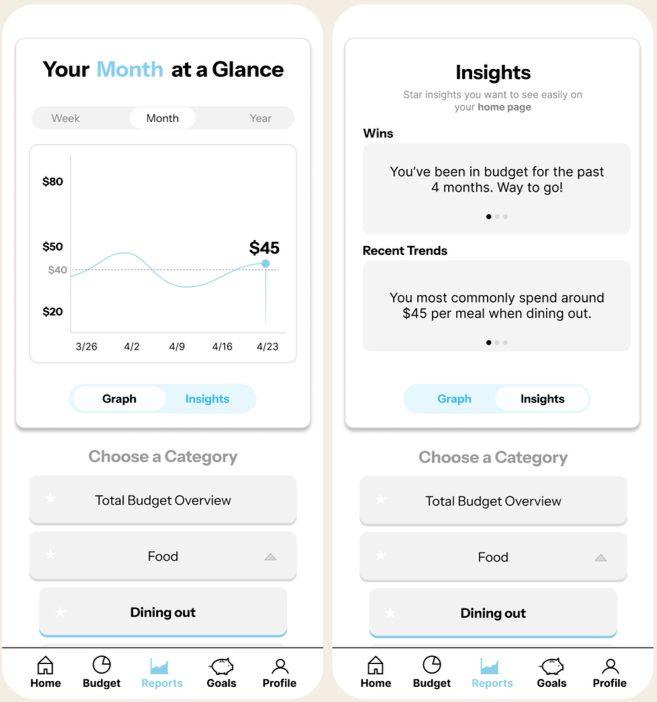
During usability testing, participants struggled to move between overall spending views and category-specific insights.
My first response was to simplify the reports screen by prioritizing category navigation.
This made it easier for users to move between spending views, but it introduced a new problem: insights became harder to find.
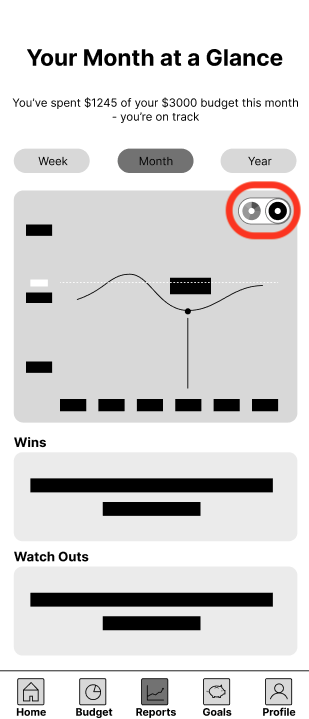
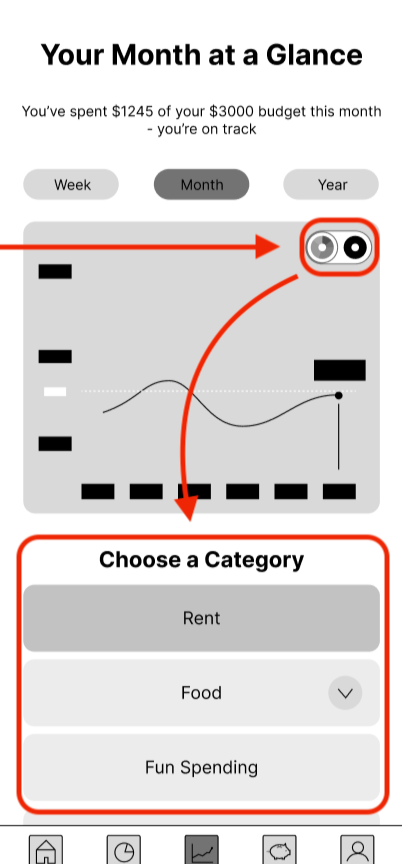
Over three rounds of iterations I developed:
Moving categories into a persistent list
Separating insights into their own view
Adding a toggle between graphs and insights
Labeling the toggle to improve discoverability
O U T C O M E S
SUS scores improved by 47% over 2 rounds of usability testing
Following multiple rounds of usability testing and refinement across the experience, SUS scores improved from 55 to an average of 81.
Participants completed tasks with less hesitation and required fewer prompts than earlier rounds.
L I M I T A T I O N S
Better information doesn't guarantee engagement
The concept improves decision support when users choose to check their budget, but it doesn't solve the challenge of remembering to check in the first place.
Future iterations would explore more proactive ways to surface guidance.
45
%
Forgot to use budgeting apps consistently
13 survey responses
With more time, here’s where I’d take Spring
Recovery after overspending. In my survey, many respondents reported feelings of guilt, stress, or anxiety after spending more than intended. Future exploration could focus on helping users understand what happened and decide what to do next rather than simply reporting that they exceeded a budget.
Proactive budget reminders. For respondents who had stopped using budgeting apps, one of the most common reasons was forgetting to check them consistently. Future iterations would explore ways to surface budget information more proactively instead of requiring users to actively open the app.
Next Project
( Redesign )
PRODUCT DESIGN
Spotify’s “Mix” Beta Feature
Making Spotify’s new beta feature for “DJ-ing” easier to understand and use.